Adding Oman to the Family
The main thing tourists do in Muscat is visit the souq, or marketplace, in nearby Muttrah. Given how hot Oman gets (50C / 122F in summer) they share the latitudinal tradition of resting during the midday heat. Yawning men emerge around 4:30 to open shops, but there was an affectionate breeze coming off the Gulf of Oman in early March so I took a stroll along the water while I waited. Down at the end I found the Place and People Museum.
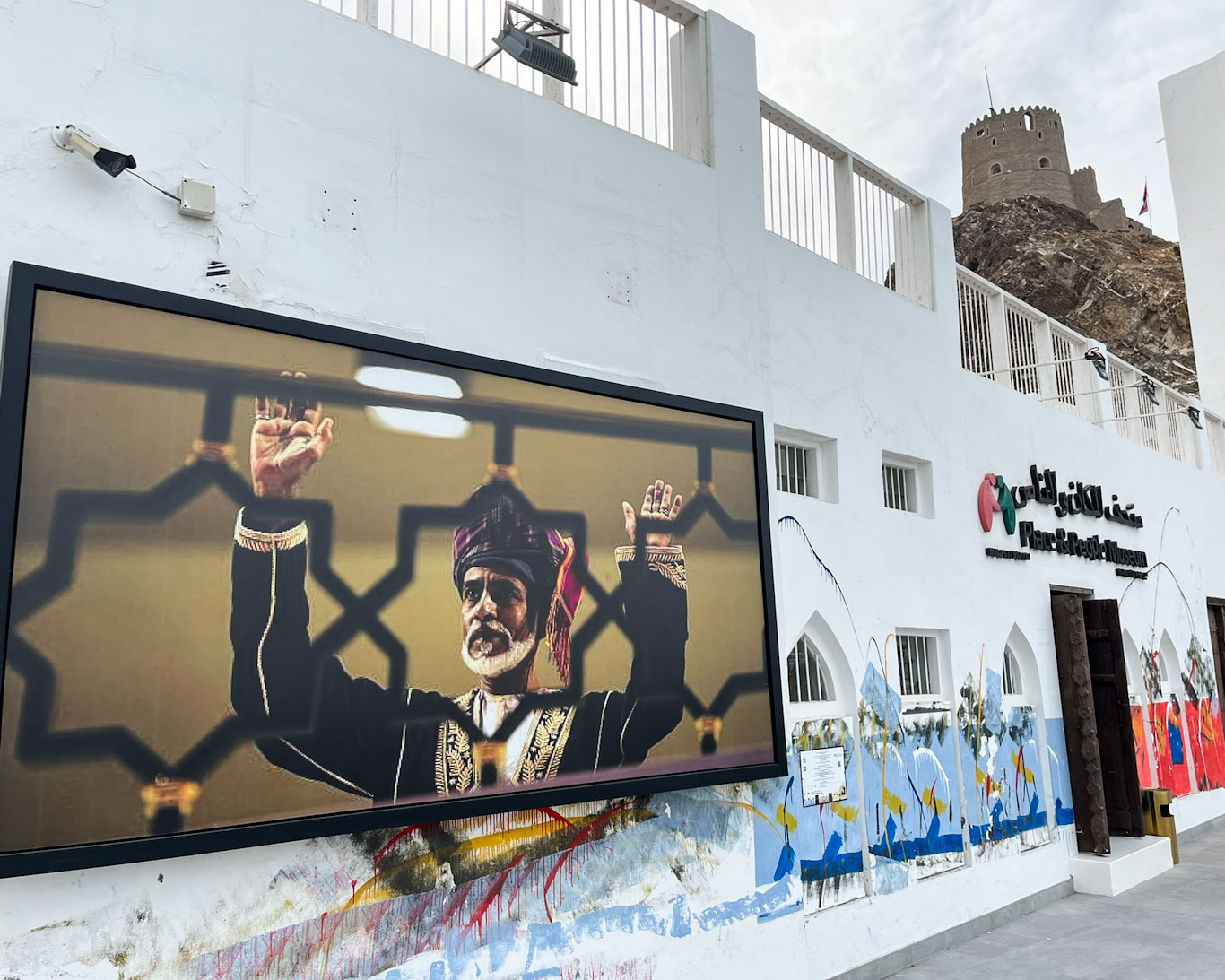
As is common on official buildings, the twin portraits of the current and previous sultans hung large on the facade. Between them was more surprising. Was it vandalism? Maybe an elementary school art project. The curator said enthusiastically “It’s modern art!”

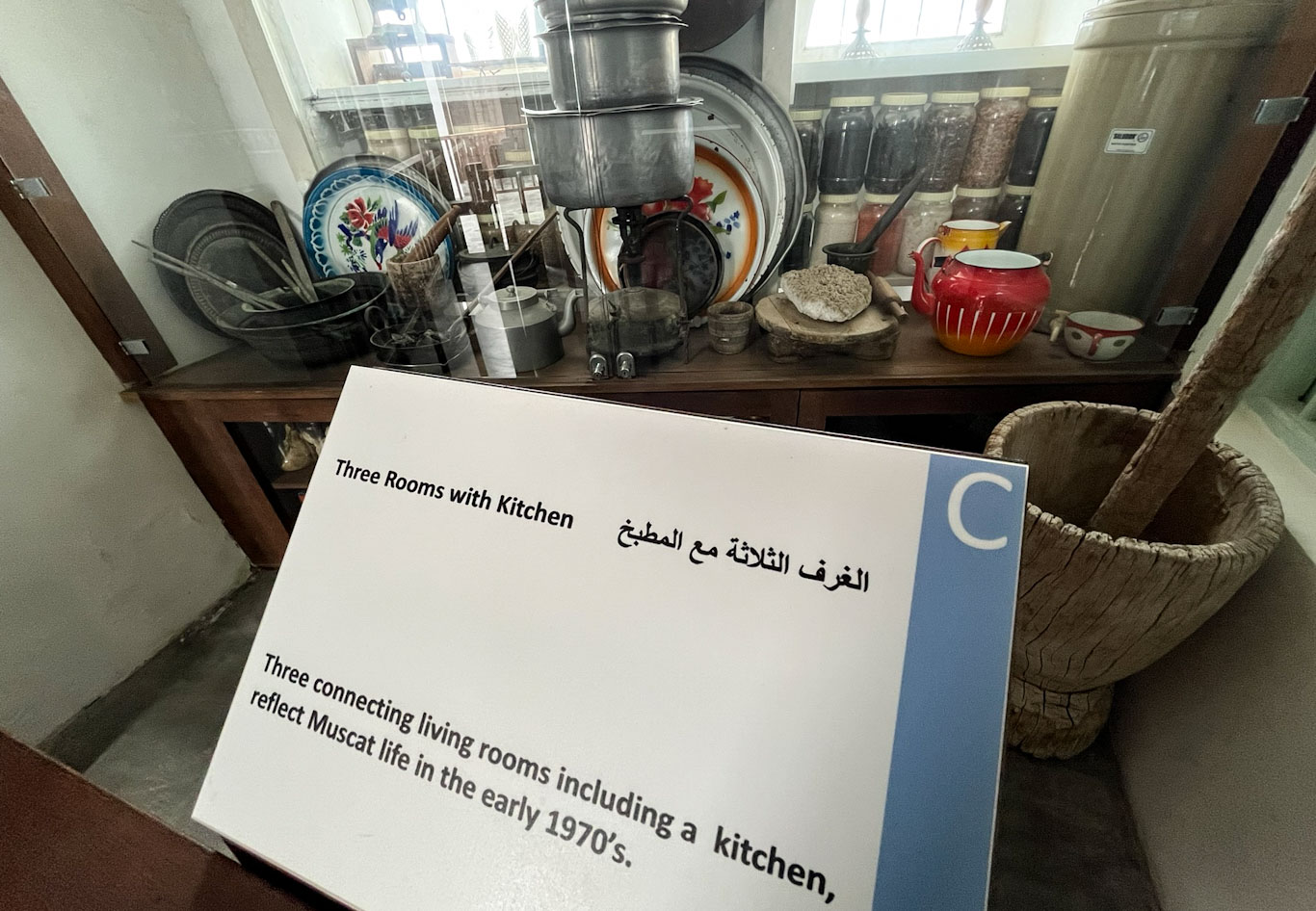
The first couple rooms were pretty but didn’t offer much substance, more of typical small house than a museum. In the kitchen stood familiar metal pots, glass jars, and a simple table, not all that different from most of the kitchens I’ve ever used. Only the large wood mortar and pestle stood out. The sign confirmed it. This house was from the 1960s and 70s.
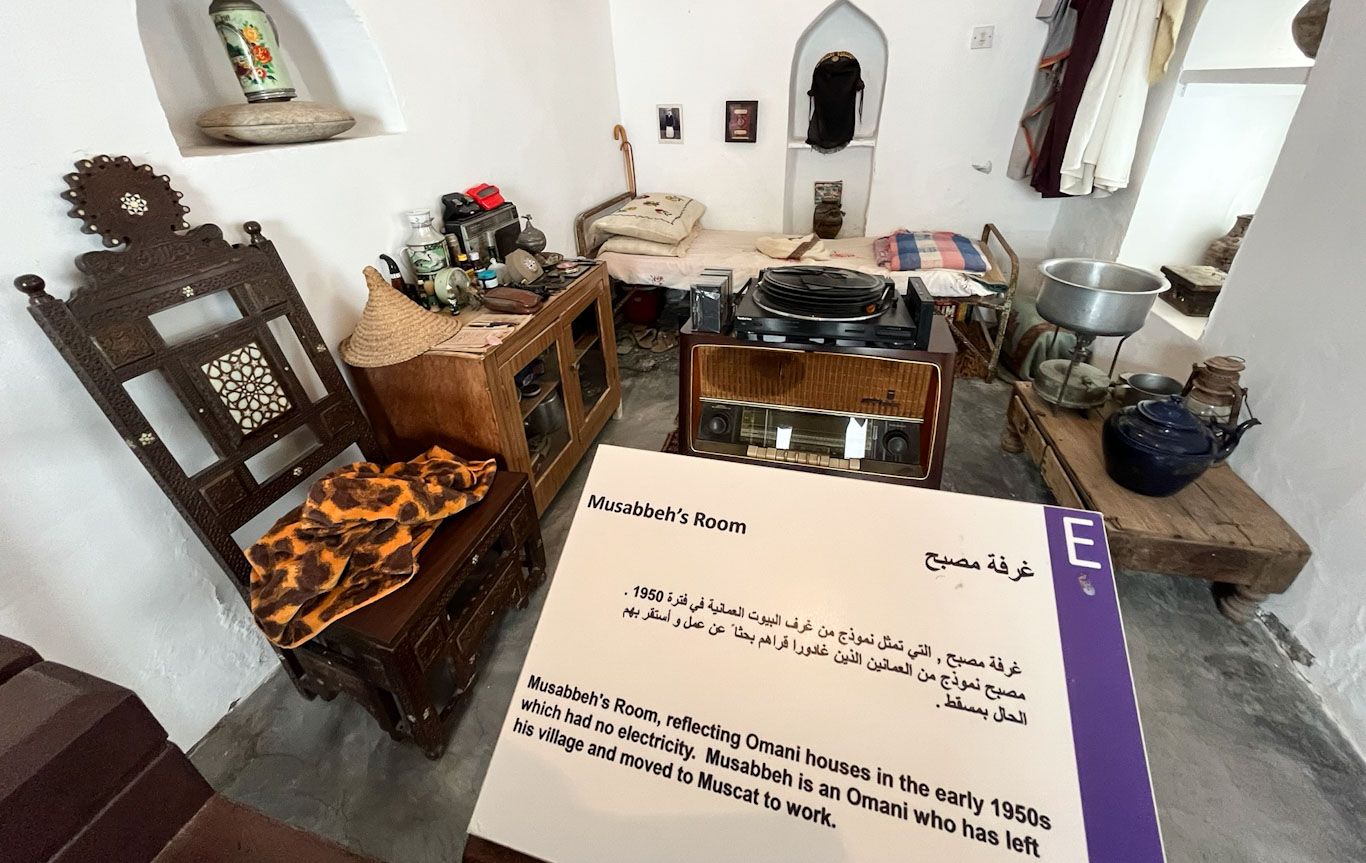
For a moment I felt a little ripped off. Oman’s history is rich with Persian, Arab, and Omani empires stretching back centuries, then sparring with the Portuguese and English when they invaded to sow the seeds for centuries of conflict. So why was I looking at a record player? The two sultans hanging outside offered a hint. Because having a photo of your current authoritarian ruler is normal, but why the previous one too? If anything, I’d seen him more than the current sultan.
Sultan Qaboos bin Said overthrew his father in a British-supported coup in 1970, then ruled until his death in 2020. Over that impressive 50 year reign he massively modernized the country. He developed the economy, spread the constitution, ended Oman’s isolation, and abolished slavery for crying out loud. So of course I was looking at the 1960s and early 70s, everything changed after that. Suddenly the more antiquated/exotic items mixed in among the normality told a tale of a culture sprinting into the modern globalized world. I could almost see an Omani grandfather looking at that record player with…what? Astonishment, certainly. Fear? Pride?
A bridge formed in my mind between Oman and the former Soviet States, catapulted from cultural intransigence into the modern frenzy. That process is not easy, normally takes a long time, and leaves its mark in violence political, economic, social, and sometimes physical. I thought about the unprepared Romanians, eager in 1989 but immediately overwhelmed, retreating into traditional fears and behaviors. But the Omani seemed to be welcoming modernity with open arms.
A large percentage of people on the street were economic immigrants, but everyone I talked to on both sides of the passports was pretty happy about the situation. Details like the frequency of dealer stickers proudly left a little longer in new car windows made more sense, and I saw so many massive automobiles I felt like I was back in the US. When the receptionist had asked me if I’d gone to their massive new mall, I was so busy swallowing my “hell no” response that I hadn’t considered his pride at the abundant luxury goods. When people told me, the only foreign face on the street, about how big Omani tourism was getting, I understood it not as just a lack of perspective but as a deeply rooted desire to be part of the global flow. Even the museum curator’s enthusiasm about the modern art exterior made more sense (and it was genuinely daring, in a part of the world that is mostly white or endless shades of tan). They were racing into the modern age (like neighboring Dubai), whereas modernity-fatigued America is constantly yearning for a simpler yesteryear. More bridges formed.
I am a deeply spoiled man, and get more than my share of time among the world’s great museums. This collection of household items barely older than me had seemed flimsy in comparison at first, but as I stepped back into that affectionate Arabian breeze, I saw a different gift from the grand galleries of the Louvre, where I can walk among old friends (and I mean old).
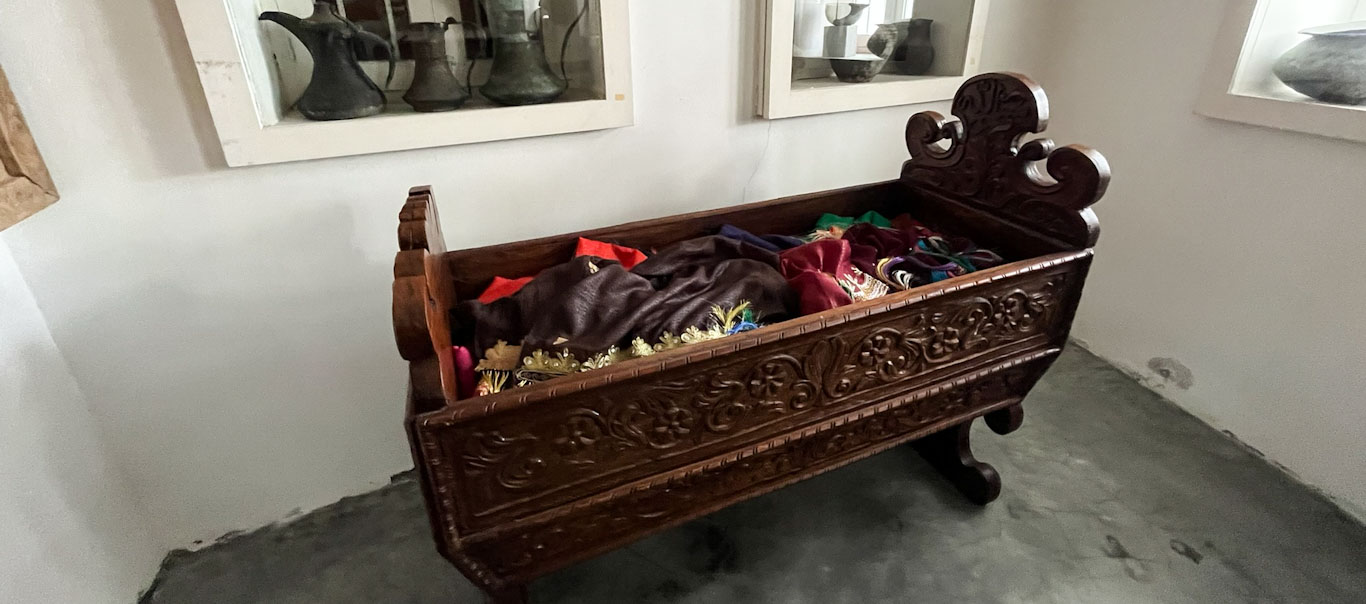
If I had seen an 800 year old doodad, it would have been interesting, sure, but dusty and remote. But in rural Thailand not that long ago I used a big mortar and pestle like the one in the kitchen, and could remember the feel of it in my hand as I’d pulverized a meal. And I could imagine using that intricately carved cradle which certainly didn’t come from IKEA but could well be in use somewhere in Oman today, rocking babies to the rhythm and feel of their ancestors. And suddenly Oman was closer within me. The great museums’ art builds bridges to universal human experiences, but this small house in Oman built a much more present-day connection. And isn’t connection and expanded awareness a big part of why we travel?
Before heading to the souq I took another look at the sultans. The previous one was immediately charismatic, with a twinkle in his eye, and I could well understand why his visage pops up all over Oman. The new ruler looked much more stern, even suspicious, and given the perils of this modern age on the cusp of a massive change, I found myself hoping he’ll be able to navigate and assist that change for a better world. A week ago Oman had just been another name on a map, but after coming here, talking to the Omani, eating their food, and walking through this little museum, it was vividly another member of our world family, and I wanted the best for it.
What a time to be alive. What a time to travel.

Oman is full of fascination.
LikeLike