What I Found in Luxembourg
I wasn’t sure about Luxembourg. I enjoyed it as a largely clueless tourist, but would it satisfy the discerning Europhile I had in mind for a tour member? I’ve lived in and love the other two countries of Benelux, but to understand this crucial axis of Europe, you have to include all three. I admit to some trepidation on the train ride in. Relief began before I even arrived.
The countryside of Luxembourg is the kind of idyllic wooded farmland that makes me wish I was a painter, but the stories that live there need a legion of writers. Village names bounced between languages, Troisvierges to Wilwerwiltz, as we navigated the footprints of clashing powers, but their strife is long gone, solved in and by this region, and I saw only townsfolk living the lives you could wish for anyone.
Then the city itself opened before me with its broad ravine where the River Alzette curved between thickets of native birch and hazel trees, spanned by the soaring bridges that surprised me on my first visit. A backpacker, pre-phone, I was embarrassed to ask anyone “Are those Roman aqueducts?”

No, they’re not, though the Romans were here too. I was pretty sure the Romans never built that high. So who did? The answer to that is more than enough to bring a tour here, and I spent last week enjoying the discovery.
History lover that I am, I can’t resist one paragraph of preview. The last thousand years of Western European history are dominated by the tidal surges of the great powers, namely the French, the Germans/Austrians/Holy Roman Empire, and the Spanish, with my beloved Dutch in the mix and you know the Habsburgs will pop up somewhere. They all play a part in Luxembourg, because where else but the controlling promontory between France and Germany, the Meuse and Rhine rivers, are you going to find the fiercest clashes?

Those martial centuries made Luxembourg the most fortified place in this part of Europe, earning it the enduring nickname “The Gibraltar of the North,” and an enthusiast of castles and ruined fortifications will find no greater treasure trove than Luxembourg. Luckily for all of us, those long years of sharp blades and hot gunpowder are gone, and we are left with the richness of crossing cultures.
In Luxembourg you walk streets like Paris, but without the tourism, the bustle, or (and I say this with beaucoup d’amour pour les Parisiennes) without the Parisians. Do the cars even have horns? Both Louis XIV and Maria Therese of Austria claimed the city at some point, and the broad boulevards and Hausmann architecture tell that story, but in their blending I found something special.
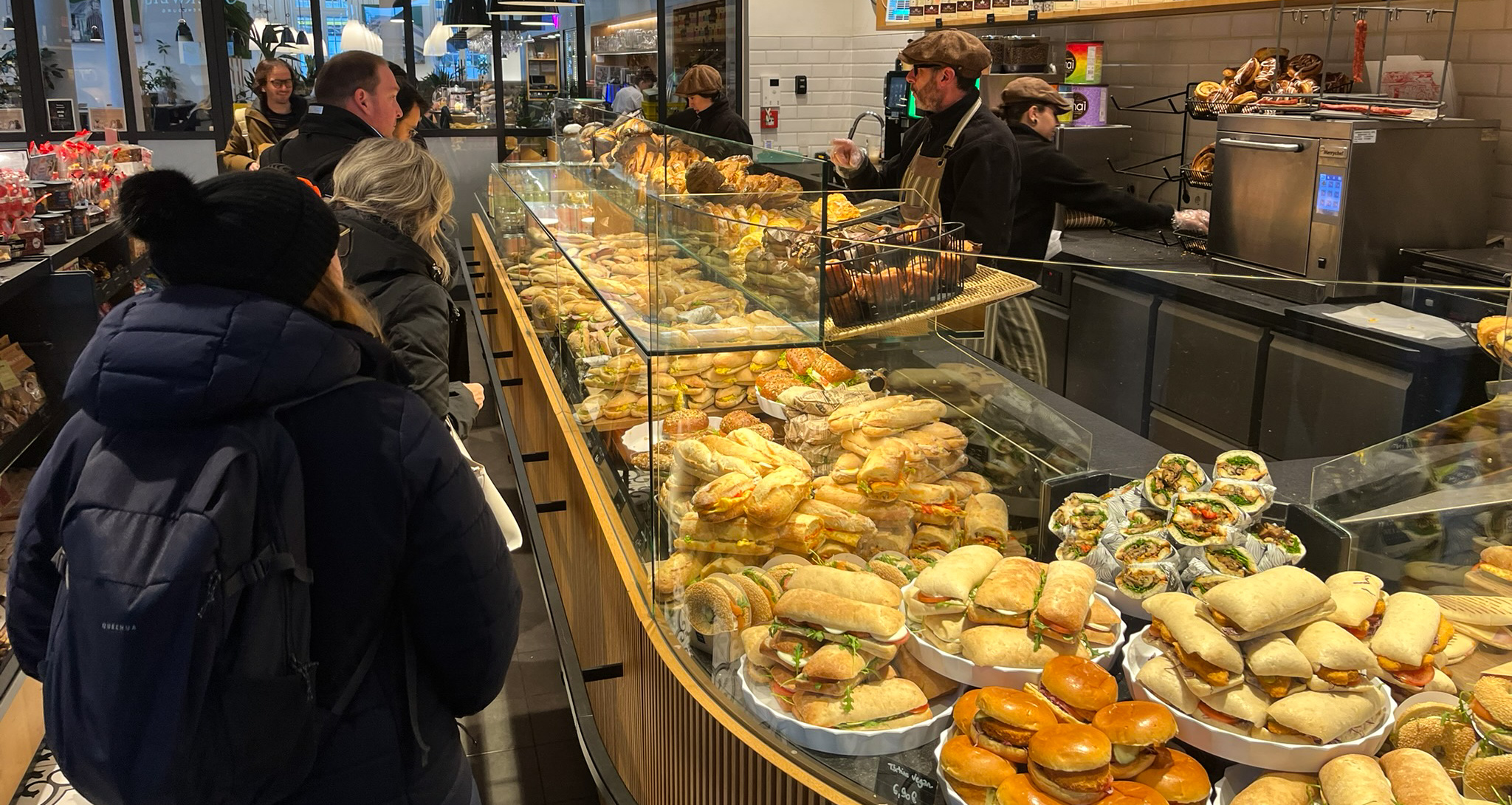
Can you guess where it most struck me? You know it’s the belly. I felt like Scooby Doo, caught by long reaching fingers of enticing aroma that drew me to bakeries stuffed with fresh croissants aux chocolat, then next door to the savory wealth of roast pork knuckle. Take the refinement of the French, back it up with the solidity of the German world, give it a few centuries to age like fine wine, and you’ve got a winning formula.
Thankfully the city comes with enough museums, castles, and almost excessively beautiful panoramic walks to fill the hours between meals. And in August, they, together with the story of the nearby crux of WWII, will fill the last two days of my tour.
I cannot wait to go back.
PS. For more info on the Benelux tour, check out the tour page here, and my quick introduction to Rotterdam, here. (The presentation is the first 20 min, then it’s Q&A)

What a joy to see Luxemburg through your eyes while reading this, thank you.
LikeLike
My pleasure, anonymous friend! I can’t wait to take people back there, for myself and for them. I love expanding mental maps of The World’s Great Places!
LikeLike
A few years back, we had a lucky trip to Luxembourg on a Sunday. When we announced our plans everyone said, ‘Don’t go on a Sunday. The place is closed.’ It isn’t on the first Sunday in December in the lead-up to Christmas. There were parades, music, Father Christmas and open shops.
LikeLiked by 1 person
I love that! Luxembourg is a funny place, since Europeans don’t go there much either, so I can imagine Sundays are quieter as locals stay home. Luckily the beauty (and most of the fortifications) never close. I’m putting together a Christmas Market tour, maybe I can fit Luxembourg in there…
LikeLiked by 1 person